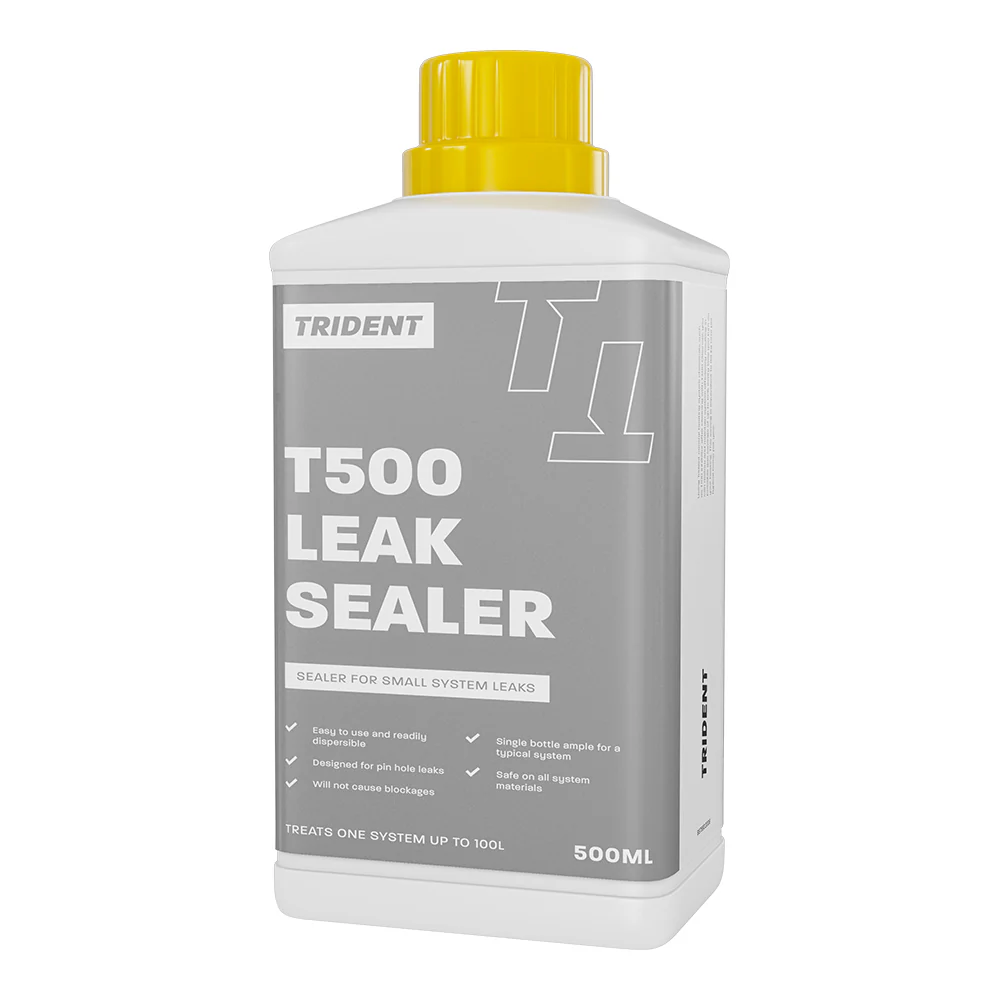
Trident - T500 Central Heating Leak Sealer - 500ml
T500 Leak Sealer is used in domestic heating systems for sealing small, internal and inaccessible leaks and weeping joints. It is suitable for use with all metals, including aluminium. A seal works best in warm/hot circulated water and once it has been evenly dispersed, will be effective within 24 hours (this will vary depending on the rate of leakage and the temperature).
Cleansing
Circulate T300, with all the valves open, for a minimum of 2 hours after central heating has maintained working temperature but can be left in for up to four weeks.
Application
500ml of Leak Sealer is sufficient to treat a typical domestic system of up to 10 radiators, or 100 litres of system water. Larger systems will require more. After dosing is complete, the system should be operated normally for at least 15 minutes (heat is beneficial).
Open systems: Dose via F&E cistern, via a bypass feeder or use a dosing vessel.
Sealed systems: If the system is empty, add to any convenient part before filling. If full, inject via the filling loop, or other access point.
Original: $16.79
-65%$16.79
$5.88Product Information
Product Information
Shipping & Returns
Shipping & Returns
Description
T500 Leak Sealer is used in domestic heating systems for sealing small, internal and inaccessible leaks and weeping joints. It is suitable for use with all metals, including aluminium. A seal works best in warm/hot circulated water and once it has been evenly dispersed, will be effective within 24 hours (this will vary depending on the rate of leakage and the temperature).
Cleansing
Circulate T300, with all the valves open, for a minimum of 2 hours after central heating has maintained working temperature but can be left in for up to four weeks.
Application
500ml of Leak Sealer is sufficient to treat a typical domestic system of up to 10 radiators, or 100 litres of system water. Larger systems will require more. After dosing is complete, the system should be operated normally for at least 15 minutes (heat is beneficial).
Open systems: Dose via F&E cistern, via a bypass feeder or use a dosing vessel.
Sealed systems: If the system is empty, add to any convenient part before filling. If full, inject via the filling loop, or other access point.